Marketing
The lifecycle engine
Growing revenue from the customers we already have.
Sheran Gale, Head of Growth Marketing 23 September 2026
Where we started, and what changed
When I joined, Seatfrog had limited CRM maturity and no lifecycle engine driving activation or retention
Today the foundations are built: specialists in place of generalists, and our data making communications more personalised and relevant
By the end of Q4 the full lifecycle engine is live, moving customers through the funnel; the AI 1-to-1 decisioning engine follows in Q1 2027
How the journeys were built
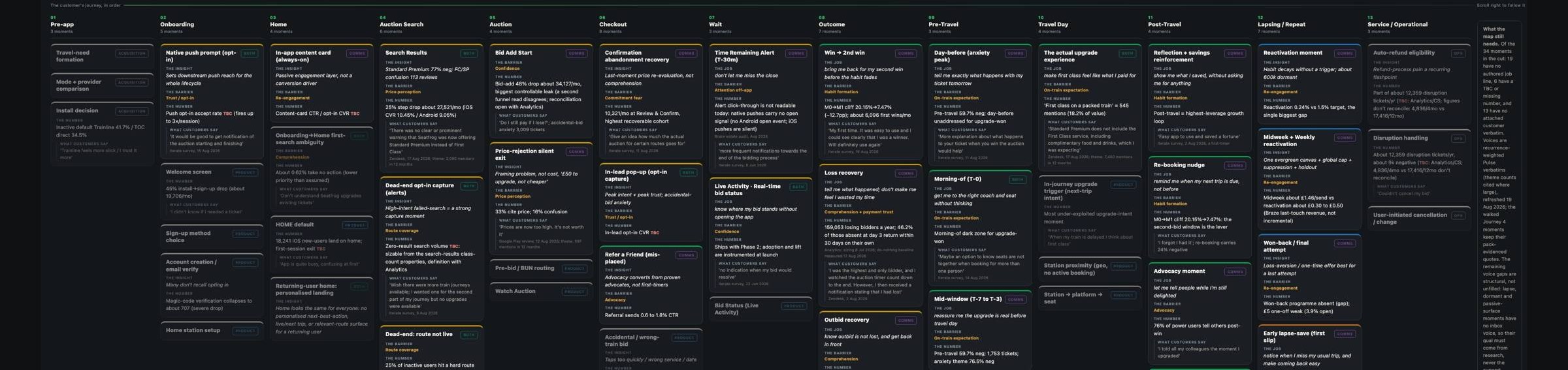
60 moments where we can win or keep a customer, mapped here not bought from an agency
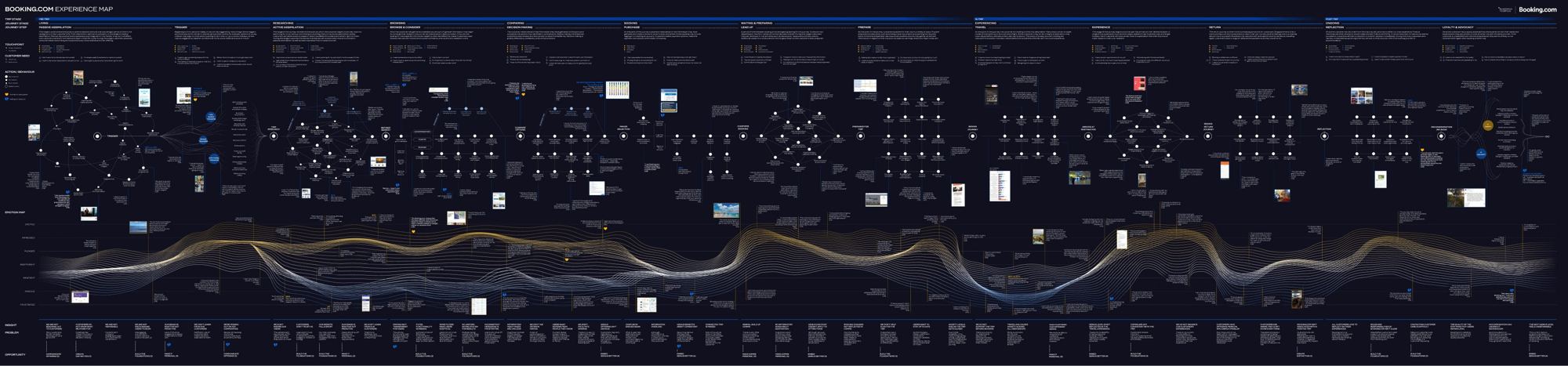
The Booking.com version below was built by an agency.
One journey in depth · churn prevention, live from 22 September
One in four active buyers goes quiet every month, 40,276 in August, unnoticed for 49 days
Nothing at allDays 1 to 49
49 days
Nothing watches. Nothing is sent. The customer is quietly going.
Every one of those days is a save that was cheaper than the one after it
The same push to everyoneDay 50, on a calendar
A calendar timer, not a signal: it fires whether they slipped or not
The same email to everyoneDay 50, the same day
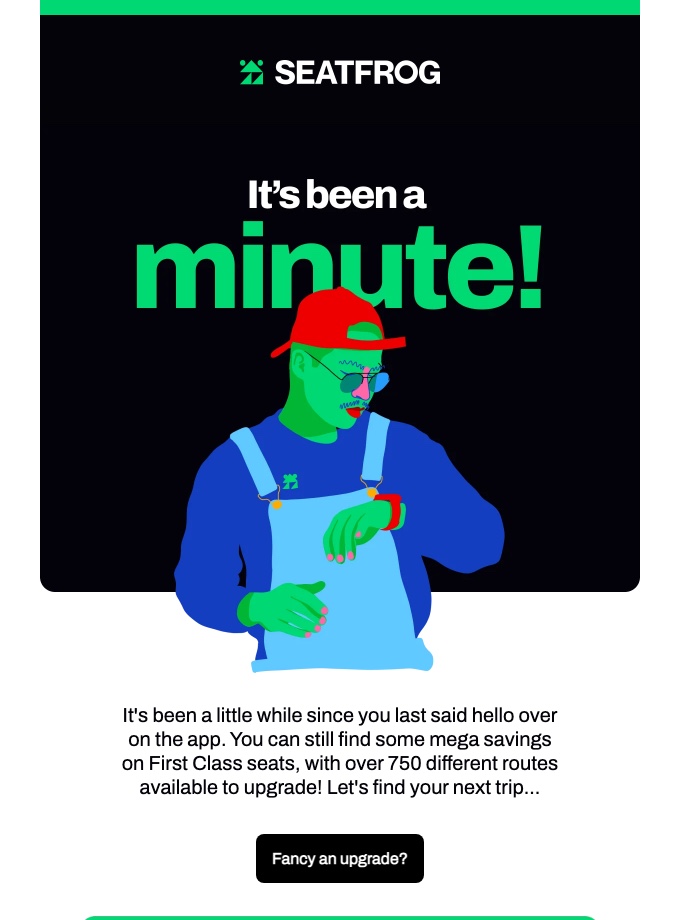
The same to everyone, and the weekly seasonal email lands the same week
A buyer is four times more likely to come back at the first slip than after two months quiet, one in five against one in twenty. That is what the churn-risk score buys: it scores every active buyer nightly and opens the journey the day they slip, not on day 50.
One journey in depth · churn prevention, live from 22 September
Quiet is 11 days for a commuter and 14 weeks for a leisure traveller; the model knows which
Day 11, past 1.5x his own gap; the journey opens the next morning
Hey Iain! I’ve been keeping a lookout on your line. Check this out… London Euston to Leeds from £24. Yes, that’s for First Class. And you only pay if you win.
Place a bidWeek 14, past 1.5x his own gap; the journey opens the next morning
Hey Dirk! It’s been a while since the last trip. When the next one comes, First Class to Edinburgh is going from £31. More room, a table to yourself, and you only pay if you win.
Place a bidWhat ships next · turning losing bidders into returning bidders, November
14,800 customers a month bid for an upgrade and lose; 81% never bid again*
The pushesIn the auction
Three fixed pushes, built into the app before Braze, the same words whatever they bid
The lost screenAt the close
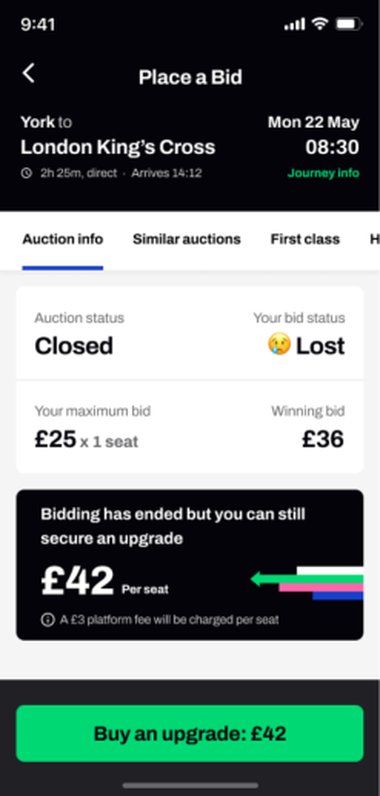
One closed screen, the same for everyone: a buy-now price, and no reason to bid again
The recovery email30 minutes after
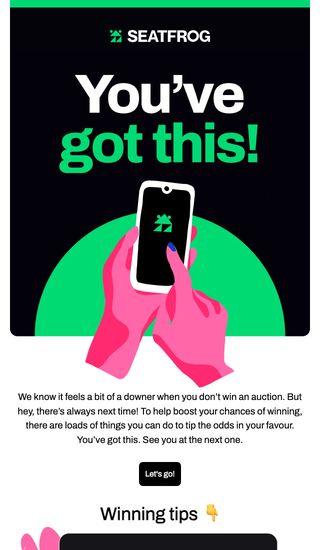
One message, whoever lost and however they lost
Losing reads as a dead end: 81% of customers do not bid again after one loss*, and the one recovery email reached about 20 of the 14,800 who lose an auction each month, because its entry rule let almost nobody in.
*81% do not bid again after one loss: Marketing’s read of the losing-bidders pack, for Analytics to confirm. 14,800 losing bidders a month: the Q4 marketing model’s sizing, 9 September 2026.
Losing bidders into returning bidders, from November · a straight account of the close and one reason to bid again, from their own history
What ships when
The full lifecycle engine is live by the end of Q4, driving compounding value from Q1 2027
Upgrades only; incremental over a 20% holdout; nothing measured yet. Three journeys sit outside Q4: the First Class experience and referrals, sized in Q1, and recognising returning customers, which needs product work.
The marketing funnel
The gap is mid-funnel consideration: customers and creators already reach a hundred times what we do, and we amplify none of it
What customers already post about us, unpaid